

Fan-out queries are the individual web searches a model runs behind the scenes to help answer your prompt. Rather than searching for your exact words, it breaks your question into several related searches, runs them, and builds its answer from what comes back. Ask ChatGPT or Claude something and it will often flash up “searching the web” while it does this.
The chat tools are not the only ones that work this way. Google does it too, now that it shows an AI Overview for most searches. To build the overview, it doesn’t just read the results for the exact query you typed; it runs a set of related searches and assembles the answer from what they return. Google calls the technique query fan-out.
Marketers have gravitated to fan-out queries as a critical component of doing AI search optimization (GEO, AEO, etc.) because of the idea that if you can figure out what those queries are and rank for them, the LLMs will read your content and thus you can influence their answers. It’s tempting to treat this with a lot of weight, yet they actually only explain part of what a model cites.
We track AI visibility for clients every day at our agency, Grow and Convert, which is why we built Traqer. This article explains more about what fan-out queries are, how they differ across LLMs, what they can (and cannot) tell you, and how to see them in the context of your content strategy.
What is query fan-out, exactly?
When you type a prompt into an AI search product, a simple question might trigger a search. A broad, open-ended one might trigger several. Google popularized the term query fan-out when it launched AI Mode, describing a technique that issues multiple related searches across subtopics to build a single response.
The pattern is the same across the different AI tools that do it. One question goes in, the model decomposes it into a set of narrower searches, retrieves results for each, and synthesizes them into one answer.
For instance, if you ask for the best document signing software, a model might run separate searches for e-signature tools, DocuSign alternatives, and pricing comparisons, then combine what it finds. ChatGPT, for instance, will often show you this directly when it says it is searching the web.
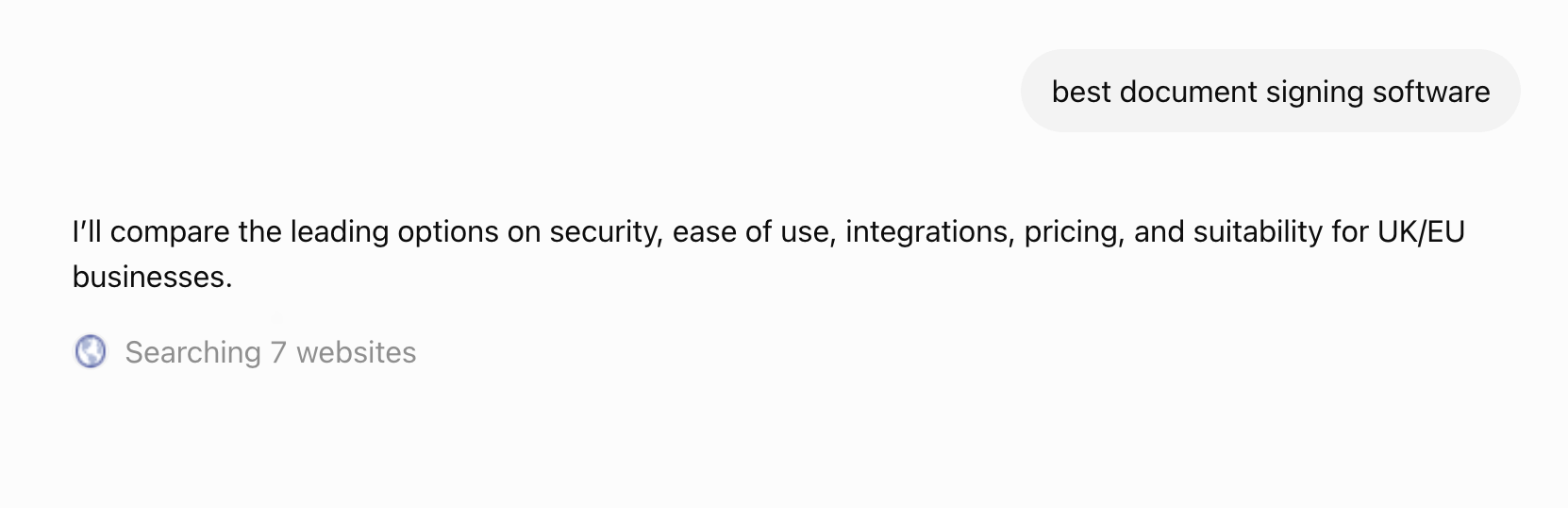
The practical takeaway is that the model is rarely answering your literal phrasing by itself. It is answering a cluster of related searches that it generated on its own, which is one reason ranking for a single head term does not guarantee you show up in LLM-based searches.
There’s another reason a single head term doesn’t get you there. The fan-out queries a model generates are long and specific, padded with modifiers drawn from the individual user, their situation, their stated preferences, and the back-and-forth of the conversation. Two people asking about the same product can trigger different fan-out queries, and neither set is something you could have predicted in advance. This is part of a problem we call invisible prompts: the real queries behind an answer are a function of the particular user, so no tool holds them. These prompts are conversational, personalized, and unguessable.
How fan-out differs across models
Fan-out is not uniform, and the differences matter for what you can learn from it. This is the same per-model difference we cover in our article on the Grow and Convert site, Not All LLMs Are the Same.
Google AI Overviews and AI Mode lean on fan-out the most, because they’re essentially search summarizers. They never answer without pulling from search results, so what ranks on Google for the fan-out queries feeds the answer directly. Gemini searches frequently and tends to run a wide set of sub-queries when it does. ChatGPT searches the web less often, and when it does it usually runs far fewer, sometimes just one, leaning more on its training data for the rest. Claude frequently answers without running searches at all, which is why it often returns no list of sources to inspect.
The effect is that fan-out queries are richest and most informative on the search-based platforms, and thinner (or even absent) on the models that lean heavily on training data. This distinction is important when reporting on LLM strategy to clients and/or senior management at your organization.
Why fan-out queries only explain part of the answer
It’s tempting to treat the fan-out queries as the full recipe for an answer, rank for those exact searches, and expect to be cited by the LLMs. But the data doesn’t really support that.
In our study of fan-out queries, only about 40% of the sources ChatGPT cited were ranking for the fan-out queries it ran, which means targeting those queries gets a source cited less than half the time. The rest came from elsewhere. Some ranked for fan-out queries the study could not see, and a large share had no organic ranking at all, which points to the model's training data. Put simply: our study indicates that more than half (60%) of cited sources in ChatGPT answers don’t rank in the first 10 pages of Google or Bing for the fan-out queries.
So the fan-out queries account for part of what gets cited. But much of the influence operates outside them, in places you cannot see and cannot quickly change.
This lines up with what we see more broadly. Models appear to form a probable answer from their training data and a loose reading of search, then run searches partly to support what they were already inclined to say. Fan-out queries give you a real window into the search half of that process.
They do not give you the whole picture, and a strategy built only on chasing them will miss most of what is actually driving the result.
So what are fan-out queries good for?
With that limit in mind, fan-out queries are still worth looking at, as long as you use them to inform your strategy rather than to chase specific queries.
Starting with the strategic point, fan-out queries show you the kinds of searches a model ran for one of your topics, which is a useful window into how it broke the question down. But they're not a list to target. Because the real queries are personalized and unguessable, there's little point chasing the specific strings you happen to see. The productive response is to work at the level of the topic instead. You decide which topics matter to your ideal customers, since no tool can hand you that list, and you cover them thoroughly enough that a model pulls you in however it phrases its searches. This is the topic-based approach, and it's what Traqer is built around.
Beyond that, fan-out queries have two narrower uses. The first is reading a specific answer. When a competitor is recommended and you aren't, the fan-out queries can show you which searches produced that result on that occasion, a starting point for understanding the gap, though it's one input among several rather than a verdict. The second is pairing them with your citation data. The queries tell you what the model searched, and the sources it cites tell you what it drew on. Read together, they point you toward the pages worth ranking for or pitching to, the same targeted outreach logic in the Prioritized GEO approach.
Fan-out and Google AI Overviews
AI Overviews and AI Mode are a special case here, because they’re wholly dependent on Google's search results. What ranks for the fan-out queries is what the overview is built from, so your Google rankings matter more here than on any other LLM. Our AI Overviews tracker guide covers this in more detail.
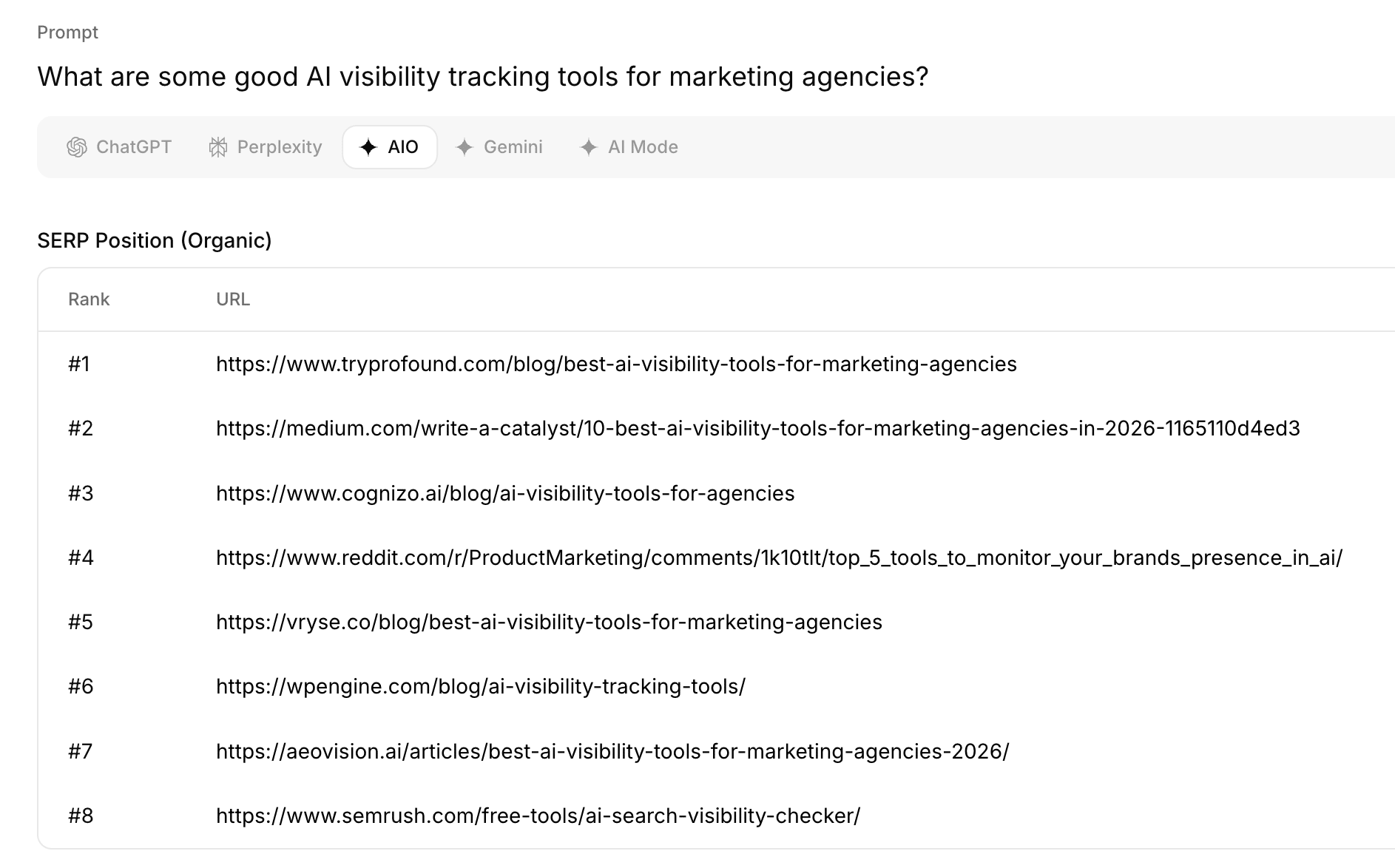
The sources an AI Overview cites are almost always different from the regular organic top ten for the same query. In other words, the pages Google links inside its AI answer are not necessarily the same pages it ranks in the normal search results below it. Ranking first does not mean you're the cited source, and being cited does not mean you rank first. You'll want to monitor both, because together they show which domains and URLs Google is prioritizing for that query, across its classic results and its AI answer.
How to see fan-out queries for the topics your brand cares about
Traqer surfaces fan-out queries for ChatGPT and Claude. Open any prompt and you’ll find them under the ChatGPT or Claude tab when the model used them, so you can see the searches it ran to build that specific answer. (We show them with the caution mentioned above in mind, since our research found they don’t fully account for what a model cites or recommends.)
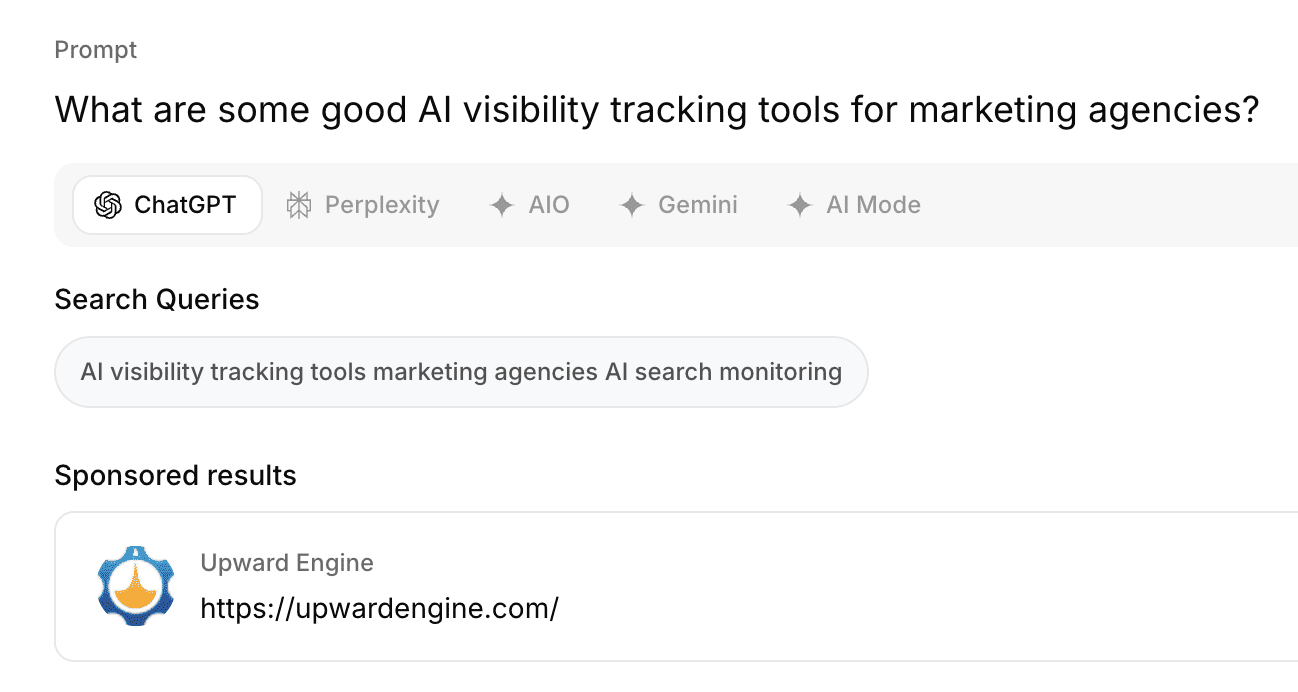
And because ChatGPT has started running ads, Traqer surfaces the sponsored results it showed for a prompt, so you can see who is paying to appear for questions like the ones your customers ask.
For AI Overviews, Traqer now shows the first ten regular organic results for the prompt alongside the AIO tab, so you can compare what is ranking on Google with what the overview actually cited.
All of this sits next to the rest of what Traqer measures: brand mentions and citations tracked separately, per model, at the topic level, and captured from the live web interface rather than an API. If you want to see the fan-out queries behind your own visibility, you can start a free trial at Traqer, or compare it against the alternatives in our overview of the best AI visibility tools.
See how often your brand appears across the LLMs. Start tracking your AI visibility with Traqer.