From tracking to action
Tracking tells you where your client brand stands. Analyze & Improve tells you what to do next. For any tracked topic, it surfaces the brands being recommended most, the URLs the models keep citing, where the gaps are, and a set of content ideas based on what's already working. Everything is drawn from live data for that specific topic and model.
What's in Analyze & Improve
Brand mention probability
Each prompt is rated as high, medium, or low probability of generating brand recommendations, with a short explanation of the intent behind the query. Low-probability prompts, broad or informational queries, tend not to surface brands regardless of how strong a client's content is. Probability scoring keeps focus on the prompts where appearing is actually possible.
Most popular brands in LLM answers
For each topic, Traqer shows which brands are being recommended most across all prompts and runs. This is the competitive picture at the topic level: who's appearing, how often, and which models they're strongest on. It sets the baseline for what a client is working against.
Articles cited more than once
Traqer lists the specific URLs being cited across multiple prompts and runs for each topic. These are the pages the models are already drawing on, which makes them the most direct outreach targets available. Getting a client mentioned on a frequently-cited page influences the inputs to an LLM, though it doesn't guarantee a recommendation.
Observed patterns
A summary of what's driving results for a topic: the types of content being cited, the patterns in which brands get recommended, and the signals that appear consistently across prompts. It's drawn from what the models are actually doing for that topic, not from general GEO advice.
Most popular brands in sources, with gaps
This view shows which brands appear most often as cited sources, alongside a gaps view that highlights the publications and pages where competitors are being cited and a client isn't. The gaps view translates into a prioritized list of sites worth targeting for outreach or contribution.
Sentiment
Traqer captures the tone the models use when they mention a brand: positive, neutral, or negative, per topic. A mention isn't automatically useful if the framing is unfavorable. Sentiment shows whether a brand is being characterized the way it would want to be, and where the framing might need improving through content or outreach.
Content ideas
Based on what's being cited most for a topic, Traqer generates a set of content ideas: the angles, formats, and specifics that align with what the models are already drawing on for that area. These are tied to live citation data, not general recommendations.
How these features help agencies
Instead of handing a client a dashboard, Analyze & Improve gives you a prioritized list: which content to produce, which publications to target for outreach, and why. Every recommendation is traceable to live data for that client's topics.
Articles cited more than once produces a ready-made outreach list for each client without any additional research. You can show a client the exact pages the models keep pulling from and explain why each one is worth targeting.
Sentiment turns the question from whether a client is visible to whether they're being talked about the way they'd want. That's a more sophisticated framing for a retainer conversation, and it opens up content and PR work that raw mention counts don't justify.
Brand mention probability keeps client expectations grounded. You can explain why a given query isn't worth tracking, or why low visibility on an informational prompt isn't a problem, in terms that are specific to their account rather than generic.
Observed patterns and content ideas give you a defensible basis for the next month's recommendations. The work is grounded in what's happening in the LLMs for that client's topics, not in assumptions.
For more on how agencies turn AI visibility data into client work, see our piece on how to track brand mentions in AI search.
Where this fits with other Traqer features
Analyze & Improve works on the data produced through topic-based tracking — the citation lists, brand rankings, and patterns it surfaces all come from the prompts and weekly runs already set up for a brand.
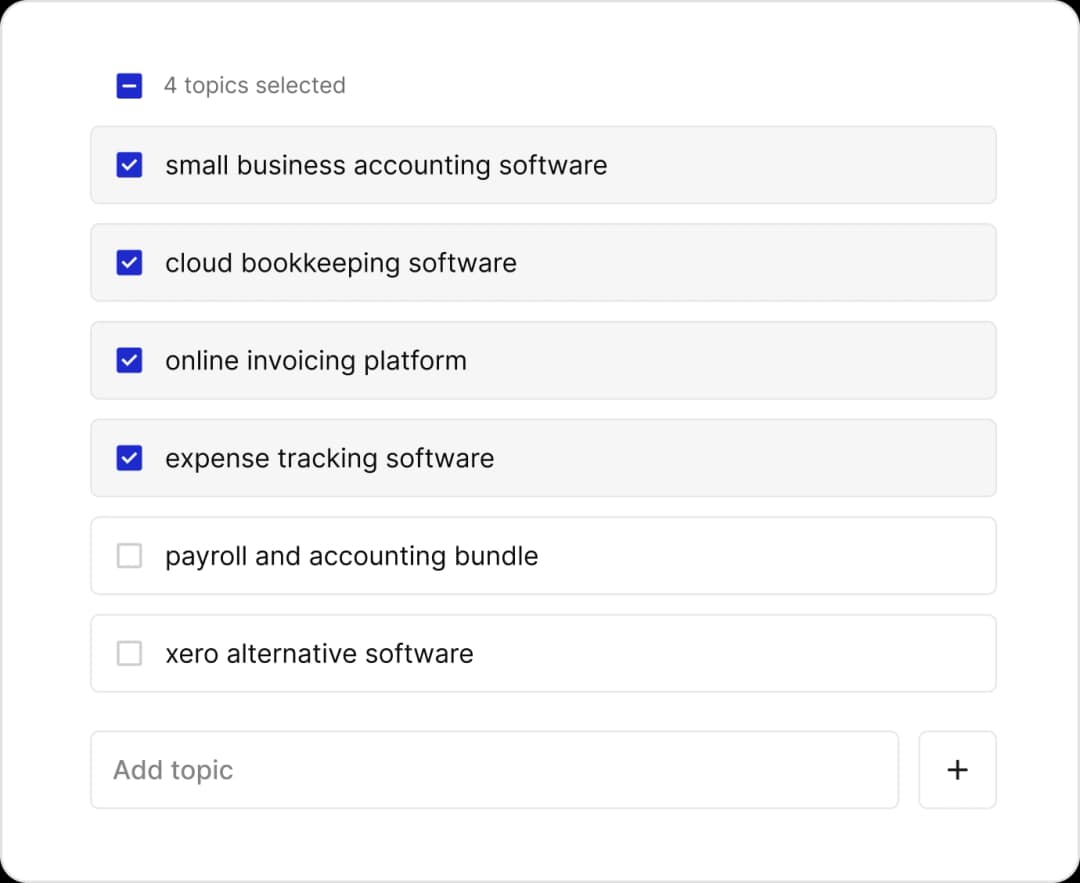
Topic-based tracking
Where the data comes from: topics cluster related prompts into buying-intent areas, measured weekly across every tracked model.
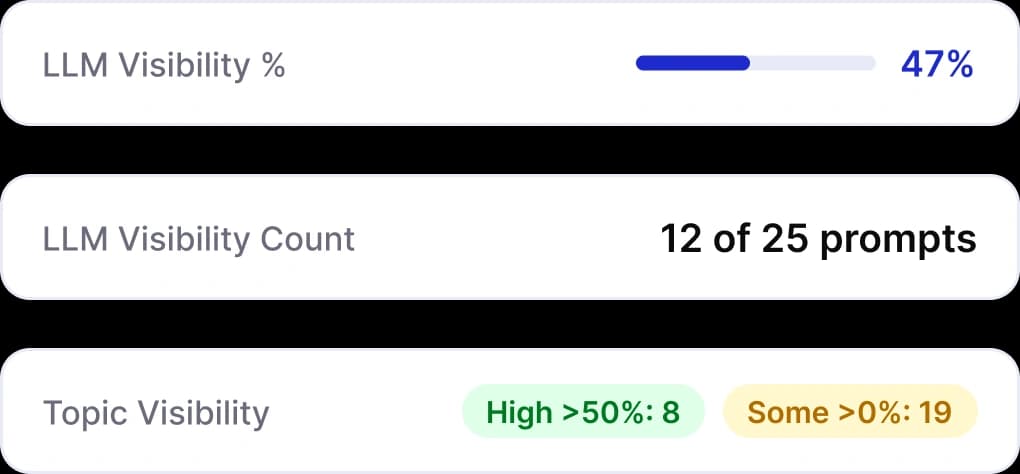
Reporting
Handles how the visibility data gets presented to clients: the headline metrics, date comparisons, white label reports, and client logins.
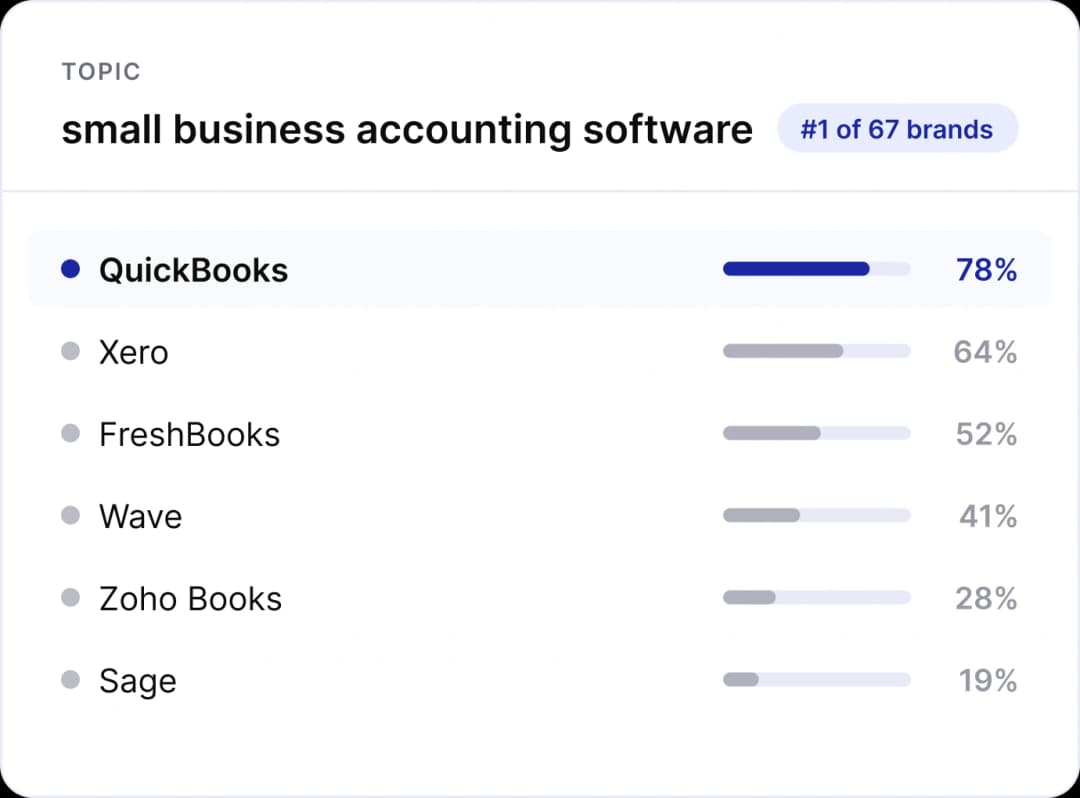
Competitor tracking
Extends the competitive view to a full topic-by-topic comparison against a defined set of rivals, including a gaps view showing exactly where competitors appear and a client doesn't.
Turn visibility data into next month's plan
Track ChatGPT, Perplexity, Gemini, Google AI Overviews, Google AI Mode, and Claude. Unlimited brands. Unlimited users. Starting at $25/month.