The unit of measurement that actually makes sense for AI search
Traqer organizes everything around topics rather than individual prompts. A topic is a cluster of related prompts that approach the same buying question from different angles. For each topic, Traqer reports the percentage of prompts where your brand appears, broken out per LLM. The unit of measurement is the topic, not any single query.
Why single-prompt tracking doesn't work
Ask ChatGPT the same question ten times and you'll get ten different answers. The brands named, the framing, and the recommendations shift from run to run. That is how large language models are designed to work. There's no fixed ranking, no stable ordering of results.
On top of that, real buyers don't type the short, repeatable queries a tracking tool would guess at. The effective prompt an LLM works with includes months of conversation history, user context, and personal preferences that no tool can replicate. Two people asking what looks like the same question are, in practice, asking meaningfully different things.
Traqer measures at the topic level rather than the prompt level: across all the ways someone might ask about a buying area, how often does your brand show up, and on which models?
How topic-based tracking works in Traqer
Topics map to buying intent
A topic in Traqer corresponds to a buying-intent area: something a real buyer would be thinking about when evaluating options. Each topic sits above a set of prompts that approach that area from different angles.
Traqer generates prompts, you finalize them
When you set up a topic, Traqer generates natural-sounding prompt variations based on the topic and the brand details entered during onboarding. You review the suggestions, remove anything that doesn't fit, and add your own. Everything is editable before tracking starts.
Visibility is reported as a rate per LLM
For each topic, Traqer shows the percentage of prompts where your brand appeared, reported separately for each model: ChatGPT, Perplexity, Gemini, Google AI Overviews, Google AI Mode, and Claude. Per-model visibility rates give you a signal you can connect to content and strategy decisions, showing where you are visible and where you have ground to cover.
Fan-out query visibility
When an LLM processes a prompt, it often generates several narrower sub-queries to build its answer from. Traqer's fan-out query visibility surfaces those sub-queries so you can see the fuller set of searches an answer was actually built from, not just the words the buyer typed. Detailed, specific content satisfies more sub-queries, which is part of why depth earns AI visibility that thin, keyword-matched pages do not.
Brand mention probability scoring
Not every prompt generates brand recommendations. Traqer rates each prompt as high, medium, or low probability of surfacing brands, so tracking stays focused on the prompts where appearing is actually possible.
Stability metrics
Because LLM outputs vary run to run, a single prompt check tells you little. Traqer's stability metrics look across all historical runs: citation rate, answer stability, new brand rate, and a citation pattern graph showing exactly which runs mentioned or cited you. Stability metrics show whether your presence is consistent, climbing, or a one-off.
Weekly update cycle
Every brand runs its full set of prompts across all tracked models once a week. GEO work moves on the scale of content shipped and mentions earned, so a weekly refresh matches how most teams plan and report. Each weekly run adds to the run history that stability metrics and date comparison draw on.
How these features help agencies
For marketing agencies, topics translate directly into client reporting: group prompts around a client's commercial focus, show movement topic by topic in a review, and point to the specific models where a content push is or is not landing.
Brand mention probability keeps each client's tracking clean and expectations sensible. Stability metrics protect you in both directions: you are not credited for a one-off spike or blamed for a single miss, and you can show a genuine trend rather than a snapshot. Fan-out query data gives you a concrete, data-backed reason to steer clients toward detailed content over generic volume.
Because topics can be added at any time and tracking expands without affecting pricing, the setup grows naturally as client priorities change.
For more on how agencies use Traqer across multiple clients, see our piece on AI visibility tracking tools for agencies.
Where this fits with other Traqer features
Topic-based tracking is where the measurement starts. Once you have visibility data at the topic level, the rest of Traqer's features build on it.
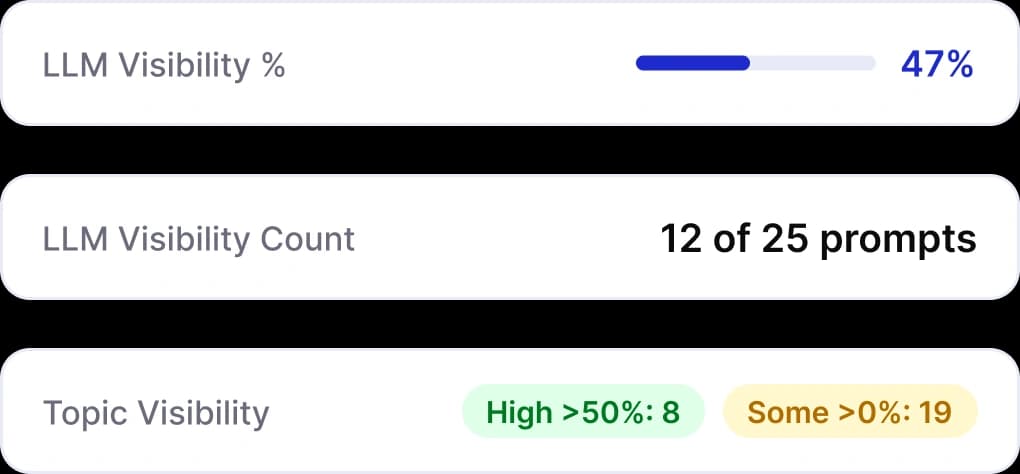
Reporting
Shows your LLM Visibility %, Count, and Topic Visibility metrics, lets you compare any two dates side by side, and makes the data presentable to clients through white label reports and client logins.
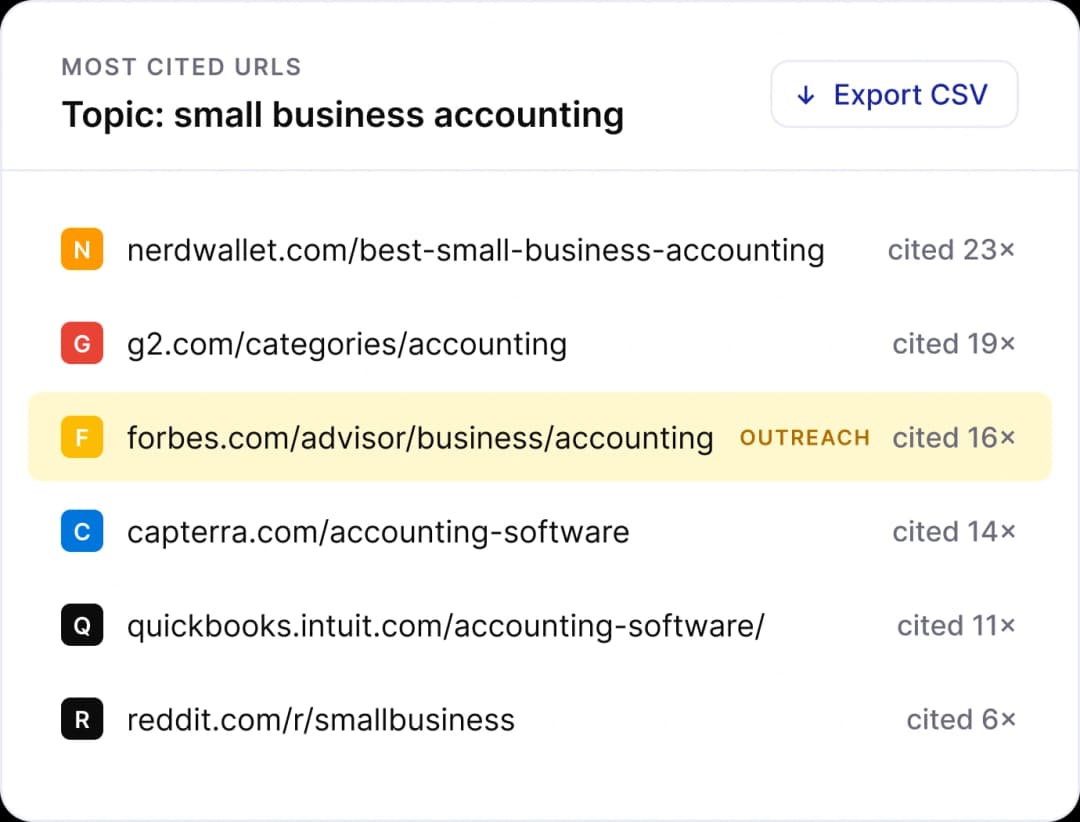
Analyze & Improve
Takes the topic view further: which brands are being recommended most, which URLs the models keep citing, where the gaps are, and what content to produce next.
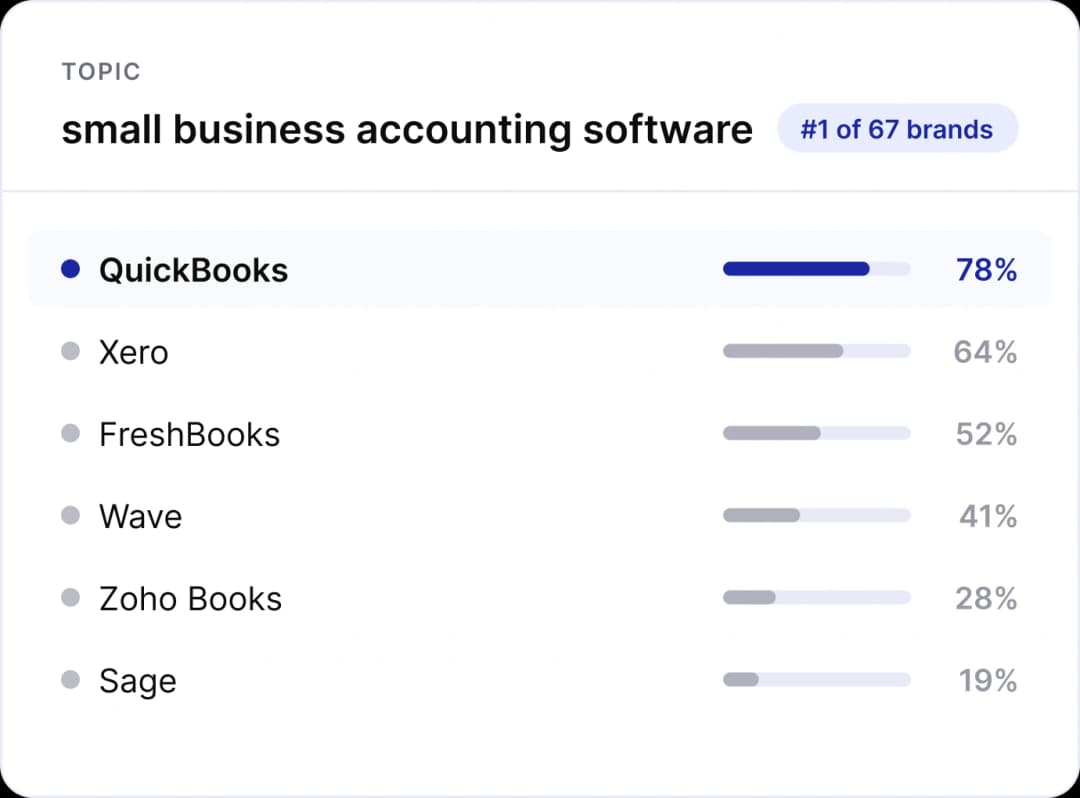
Competitor tracking
Shows how your visibility across topics compares to a defined set of rivals, and surfaces the exact prompts and topics where competitors appear and you don't.
Start tracking by topic
Track ChatGPT, Perplexity, Gemini, Google AI Overviews, Google AI Mode, and Claude. Unlimited brands. Unlimited users. Starting at $25/month.